Securing planning permission for development within the curtilage of a Grade II listed building requires a careful and balanced approach, ensuring that any proposal preserves heritage significance while delivering clear and demonstrable benefits. This project involved a modest but highly impactful proposal to support individuals facing serious health challenges and personal hardship.
The application related to a Grade II listed property operated by Dream On CIC, a Community Interest Company that reinvests all profits from its activities into charitable programmes supporting those in need. Planning permission was sought for a small, single-storey outbuilding within the garden, to be used entirely ancillary to the existing use of the listed building.
The Proposal
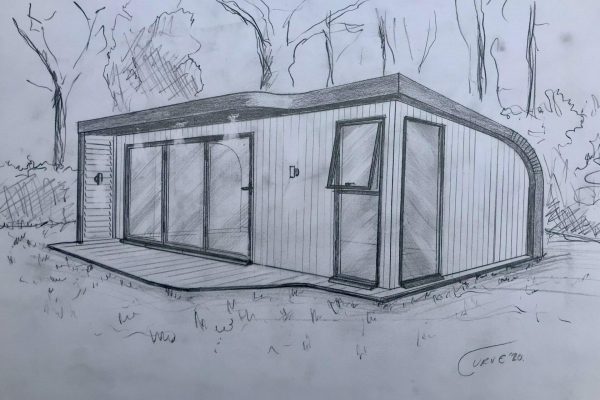
The approved development comprises a single-storey outbuilding measuring approximately 4.05m x 3.55m, with a maximum height of 2.48m and a flat roof design. The structure was intentionally modest in scale and clearly subordinate to the listed host building.
The outbuilding provides a dedicated and private space for complimentary hair and beauty treatments for individuals supported by Dream On CIC. These services are specifically aimed at women recovering from cancer or undergoing treatment, as well as people who have experienced illness, loss of confidence, or significant personal hardship. The space allows these wellbeing services to be delivered in a calm, dignified, and supportive environment.
Heritage Considerations
A key consideration for the Local Planning Authority was whether the proposal would preserve the special architectural and historic interest of the Grade II listed building and its setting.
We prepared a comprehensive Planning, Design and Access Statement supported by detailed architectural drawings, demonstrating that:
• The outbuilding is clearly subordinate in scale, height, and form
• It is discreetly positioned within the garden and not visible from the principal elevation
• No alterations are proposed to the historic fabric of the listed building
• The design is deliberately lightweight and contemporary, ensuring it is read as a secondary addition rather than a competing historic feature
This approach ensured the listed building remains the dominant and legible element within the plot, fully preserving its significance and setting.
Amenity and Use
The use of the outbuilding is low-intensity and entirely ancillary. There is no independent commercial operation, no additional staffing, and no increase in parking or servicing requirements.
The single-storey form, modest height, and careful fenestration design ensure there are no impacts on neighbouring amenity, including overlooking, noise, or disturbance.
Public Benefit
Dream On CIC operates on a not-for-profit basis, with all profits reinvested into community support initiatives. These include complimentary makeover and styling days for women recovering from cancer or undergoing medical treatment, confidence-building support for individuals affected by illness or life disruption, and free personal development programmes delivered through its sister organisation, The Blossom Charity.
The approved outbuilding provides a permanent, purpose-built space to deliver these services, significantly enhancing the wellbeing, confidence, and social inclusion of vulnerable individuals. These outcomes were recognised as a clear and meaningful public benefit.
The Outcome
Planning permission was granted, with the Local Planning Authority concluding that the proposal preserves the significance of the Grade II listed building and its setting. Any minimal change within the rear yard was considered acceptable and clearly outweighed by the substantial social and health-related benefits delivered by the scheme.
Key Takeaway
This case study demonstrates that development within the curtilage of a listed building can be successfully achieved when proposals are modest, well-considered, and supported by a robust heritage and public benefit case.
For community-focused projects involving listed buildings, early specialist planning advice is essential.
Why We Do What We Do
At NAPC, planning is not just about policy compliance and drawings, it is about enabling outcomes that genuinely improve people’s lives. Projects like this reflect why we do what we do. By helping organisations such as Dream On CIC secure planning permission in sensitive heritage settings, we are able to support initiatives that restore confidence, dignity, and wellbeing to people affected by cancer, illness, and personal hardship. When planning is done properly, it becomes a tool for positive change, and this project is a clear example of that in action.
Got a project in mind? Contact us here.