Local Authority: South Kesteven District Council
Application Type: Lawful Development Certificate
Proposal: Siting of a single-unit mobile home for ancillary residential use
NAPC Involvement: Planning statement and lawful development justification
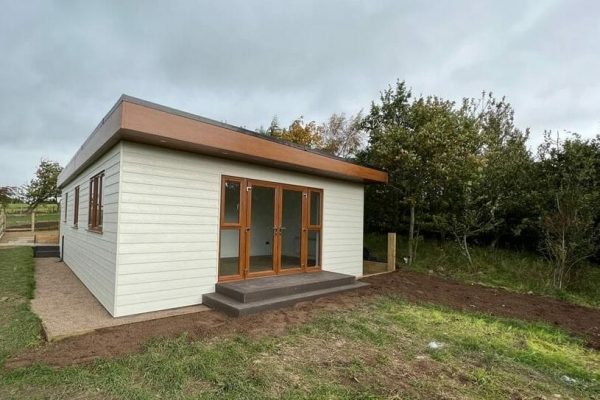
NAPC prepared a detailed planning statement in support of a Lawful Development Certificate application for the siting of a single-unit mobile home within the residential curtilage of a dwelling in Lincolnshire.
The proposal sought formal confirmation that the mobile home could be lawfully stationed within the existing garden to provide additional accommodation for family use. The mobile home was intended to support the applicant’s parents, allowing care and support to be provided close to the main home while still maintaining a degree of independence.
The planning issue
Mobile homes are often misunderstood in planning terms. The key question is not simply whether the structure looks like a building, or whether it contains facilities such as a bedroom, bathroom or kitchen.
The key questions are whether the mobile home meets the statutory definition of a caravan, and whether its use would remain ancillary to the main dwelling.
In this case, NAPC prepared a clear legal and planning case demonstrating that the proposed mobile home would not amount to operational development. In simple terms, this means the siting of the mobile home would be treated as a use of land rather than the construction of a new building.
Demonstrating caravan status
The Planning Statement explained that the mobile home would be designed for human habitation, would remain within the relevant size limits set out under the Caravan Sites Act 1968, and would be capable of being moved from one place to another.
The submitted details confirmed that the mobile home would measure 11.9 metres in length, 6.8 metres in width and 3 metres in internal height. This kept the unit within the maximum statutory caravan dimensions.
A key part of the strategy was addressing common misconceptions around mobile homes. For example, a mobile home does not need to have wheels, a drawbar, or be moved regularly in order to qualify as a caravan.
The relevant test is whether the structure is capable of being moved, including by crane or transport vehicle, rather than whether it is likely to be moved frequently.
Remaining ancillary to the main home
NAPC also demonstrated that the siting of the mobile home would not create a separate dwelling or a separate planning unit.
The accommodation would remain ancillary to the main dwelling. There would be no separate address, postal arrangements, utility meters, parking area, garden area, access, or independent council tax registration.
The mobile home would remain reliant on the main dwelling for its day-to-day function and would be used as part of the same residential planning unit.
The Planning Statement also referred to a wide range of relevant appeal decisions and legal principles. These helped demonstrate that a mobile home can contain facilities for day-to-day living without automatically becoming a separate dwelling.
The important question is how the unit would be used in practice, and whether it remains part and parcel of the main residential use.
Why this matters
This case highlights the importance of understanding the difference between a mobile home, an outbuilding and a new dwelling.
A mobile home used for ancillary residential purposes is not assessed in the same way as a Class E garden building. In the right circumstances, planning permission may not be required at all.
Instead, a Lawful Development Certificate can provide formal confirmation from the council that the proposed use is lawful.
For homeowners, families and annexe providers, this can be an important route to consider where additional accommodation is needed for relatives, care, support, or multi-generational living.
Planning support from NAPC
At NAPC, we regularly support clients with Lawful Development Certificate applications for mobile homes, caravans, annexes and garden accommodation.
Our role is to present a clear, evidence-led case that addresses the correct legal tests from the outset.
If you are considering a mobile home or annexe within a residential garden and want to understand whether planning permission is required, get in touch with NAPC for specialist planning advice.